Characterization and Catalytic Upgrading of Pyrolysis Products
Pyrolysis oils can be further processed in several ways: as a direct substitute for fuel to generate heat; through catalytic upgrading to produce fuels; by conversion into synthesis gas (the bioliq® process); or through co-processing in refineries. The chemical composition of pyrolysis condensates is extremely complex: Most components contain oxygen, are therefore highly polar, and tend to undergo phase separation between water-soluble and nonpolar organic components. About half of the organic compounds are present as monomers, while the other half are present as aromatic oligomers, known as pyrolysis lignin. The analytical methods used include gas chromatography, gel permeation chromatography, magnetic resonance spectroscopy, elemental analysis (C, H, N, S), and Karl Fischer titration.
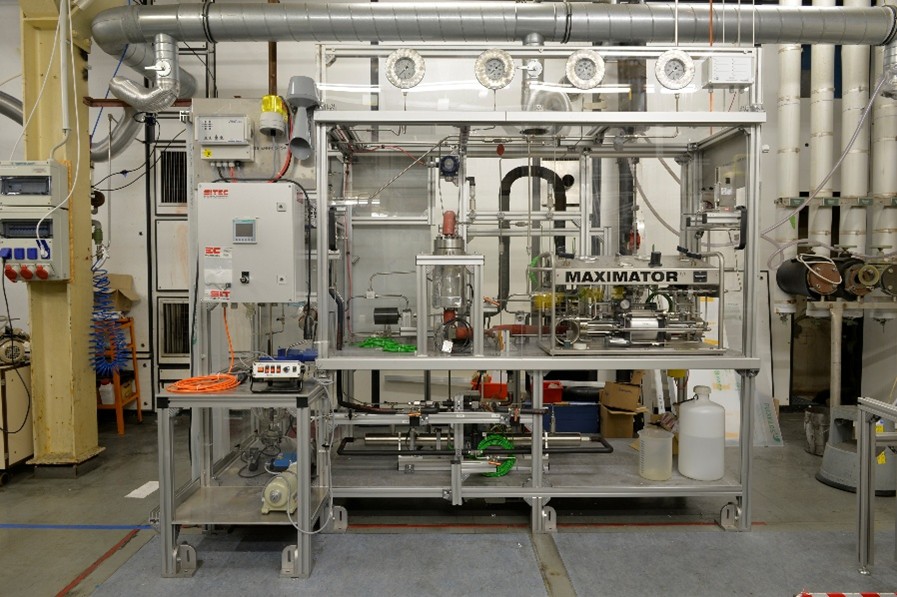
The focus of the research is the investigation of catalytic systems for the hydrogenation of pyrolysis oils with the target of extensive deoxygenation. This is done to stabilize the oils (improved shelf life), increase their calorific value, and enhance their miscibility with nonpolar substances (co-processing in refineries or blending in fuel production). The research primarily focuses on in-house-prepared or commercial metal oxide-based catalysts in powder form for simple batch laboratory experiments (up to 200 ml) or as sintered bodies for multistage processes in the continuous pilot plant (1 kg/h). Methods used to characterize the catalysts include ICP-OES, EDX-SEM, TPD, and BET measurements. Promising catalysts and process conditions can be validated in the hydrogenation plant at the Carbon Cycle Lab in a subsequent scale-up step.