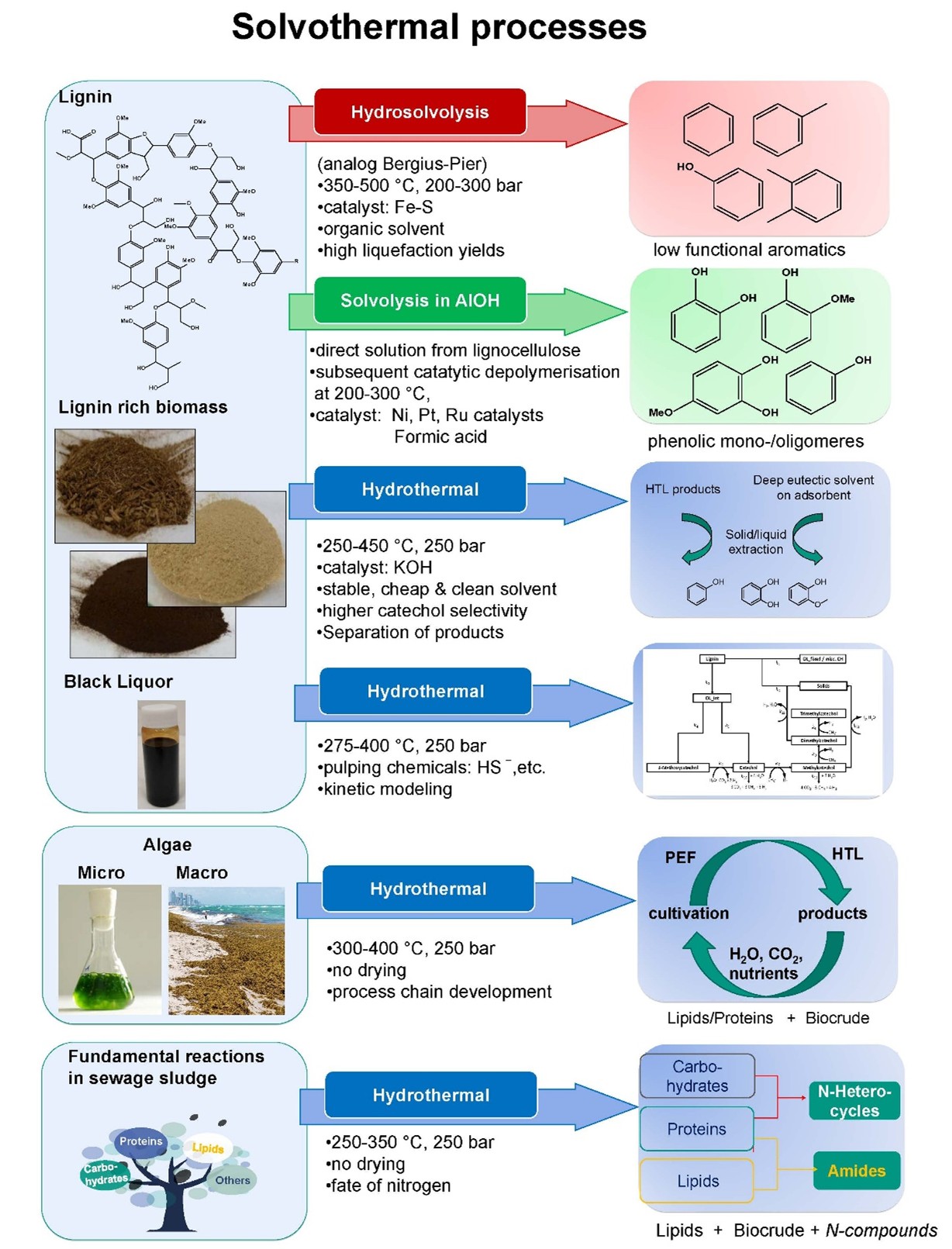
Hydrothermal and Solvolytic Biomass Fractionation
The polymeric structure of lignocellulosic biomass can be broken down not only by pyrolysis (thermal) but also by solvents. In addition to solvolysis under reductive conditions (similar to the Bergius-Pier process), a key focus is on hydrothermal liquefaction (HTL). At high temperatures and pressures, water exhibits special properties that enable more selective cracking than purely thermal methods. At approximately 300–375°C, biomass can be converted into a highly viscous product (bio-crude) that has a higher calorific value and lower water content than pyrolysis oils. The target products are functional compounds of the highest possible value that are suitable as chemical building blocks. By integrating HTL into a process chain, other valuable compounds such as amino acids, proteins, or lipids can be recovered through extraction. The feedstocks investigated include lignin-containing biomass, pure lignin, microalgae, and sewage sludge. In the case of lignin, the study examines the direct hydrothermal liquefaction (HTL) of black liquor—a byproduct of paper production—as well as the reductive catalytic fragmentation (RCF) of lignin derived from lignocellulose. In this context, the formal kinetic description of the degradation reactions—which describes the temperature dependence of product formation—is also determined. Another aspect is the separation of degradation products using modern methods such as solid-liquid adsorption with adsorbents modified using DES (deep eutectic solvents).