
Material synthesis and scale-up
Group mission
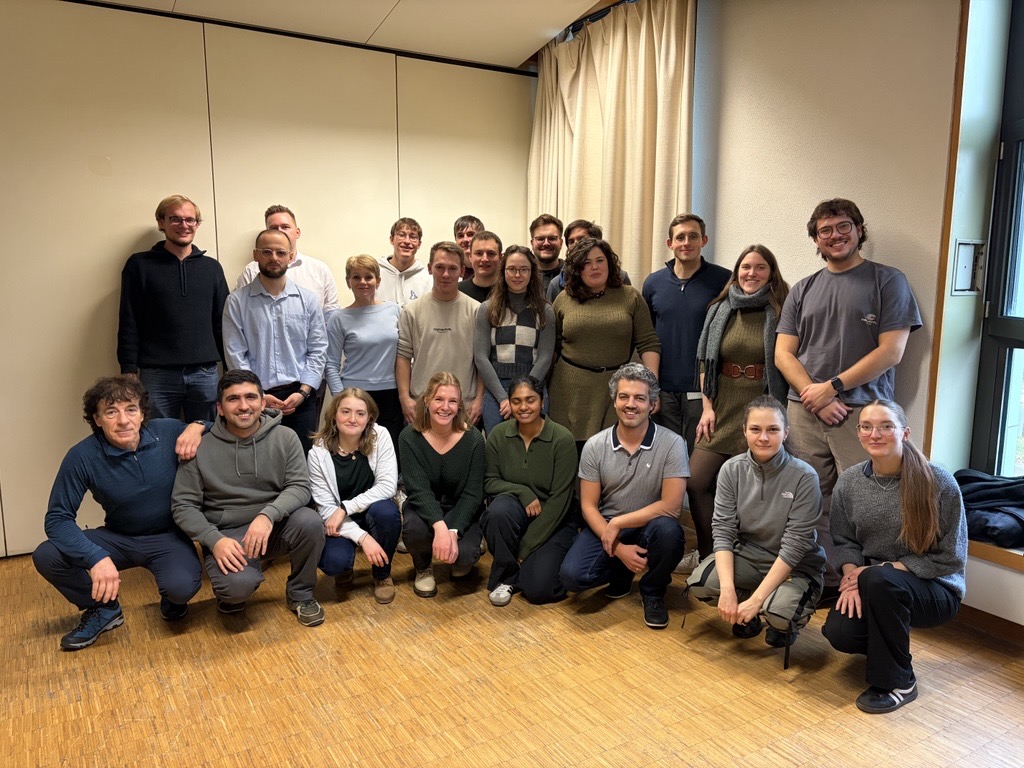
The Material Synthesis and Scale-up group at IKFT was founded in 2022. Its mission is to bridge fundamental and applied catalytic technologies and to develop new catalyst materials that support the global energy transition. Our work focusses on the sustainable utilization of carbon dioxide (CO₂) and the integration of renewable electricity into catalytic processes for producing energy carriers, such as hydrogen (H2) and its derivatives, intermediates, and chemicals. This includes developing scalable preparation routes for catalysts and catalytic materials and translating them into technical catalytic applications.
Group objective
The research group focuses on catalyst development and catalytic technologies for synthesizing chemical energy carriers within the framework of the global energy and feedstock transition. Catalysis engineering and scalable material synthesis are core elements of our research. Our work spans multiple scales: from the synthesis of nanoparticles for model catalysts to the production of shaped catalyst bodies as well as their application. Hence, we bridge academic research and technical application. Following synthesis, catalyst morphology, surface characteristics, and bulk properties are analyzed using a range of characterization techniques (microscopy, spectroscopy, diffraction, sorption, thermogravimetry, etc.) to understand the structure–activity, structure–selectivity, and structure–stability relationships governing catalytic performance.
Further, the group actively supports the joint community effort to advance the digital transformation of catalysis research. Within the NFDI4Cat 2.0 use cases, we particularly tackle the distinct gap at the interface of lab-scale academic research and industrial-scale implementation. The overarching goal is to establish a scalable, transferable digital infrastructure with standardized metadata and vocabulary for closing long-standing gaps in reproducibility and transferability.
The research scope is focused on sustainable catalysis and engineering to support the global energy transition, covering topics such as:
- Chemical valorization of carbon dioxide
- Chemical hydrogen storage using liquid organic hydrogen carriers (LOHCs)
- Induction heating of catalytic technologies
- Catalyst shaping via tableting or agglomeration
- Synthesis gas fermentation
- Ammonia reforming

Research topics and projects
Novel catalyst materials for the activation of CO2
To valorize CO₂, we develop new transition metal-based catalyst materials to investigate the fundamental relationships between structure and activity, selectivity, and stability. Beyond multi-component systems, we also modify supports, e.g., by using carbon nitride or by introducing targeted bifunctionality. Applications range from CO₂ methanation and the reverse water–gas shift reaction (rWGS) to the direct synthesis of olefins or methanol. We further study catalysts from related projects to gain insight into structural dependencies and underlying mechanisms through advanced characterization techniques. A primary objective is linking synthesis parameters to catalyst properties and performance. To this end, modified supports are often decorated with separately synthesized, well-defined nanoparticles to enable direct comparison with benchmarks and alternative support materials.
Related research projects: MTET, CDC, CARE-O-SENE, NFDI4Cat

Liquid organic hydrogen carrier (LOHC) technology
The LOHC technology eliminates the need to transport and store highly flammable molecular hydrogen by chemically binding hydrogen to carrier molecules. LOHCs are typically non-flammable, exhibit low toxicity, offer a wide liquid range, and provide high hydrogen storage capacity. This chemical storage approach using liquid hydrocarbons also enables use of existing liquid-fuel infrastructure (diesel, gasoline) for safe and facile global supply chains due to related properties. We focus on benzyltoluene (H0-BT), which can be reversibly hydrogenated to perhydro benzyltoluene (H12-BT) and subsequently dehydrogenated back to H0-BT. However, the technical release of hydrogen requires relatively high reaction temperatures due to the strongly endothermic nature of the dehydrogenation reaction and the process must accommodate large volumes of released hydrogen. We therefore develop catalytic technologies for dehydrogenation, including the development and scale-up of novel catalysts and their integration into various reactor concepts, such as a continuous three-phase slurry reactor with improved mass and heat transfer properties.
Related research projects: MTET, CDC, Oxo-LOHC, InnoPool - AutoMat

Scalable syntheses and shaping of catalysts
Large quantities of catalytic materials are required for technical applications. We focus on scalable synthesis methods to enable the transfer of research catalysts into practical use. Our surfactant-free synthesis of metal (Ce, Co, Cu, Fe, In, Ni) oxide, hydroxide, and oxyhydroxide nanoparticles currently yields several grams of well-defined nanoparticles for use in model systems and fundamental studies. Classical catalyst preparation techniques, namely co-precipitation and impregnation, are scaled up to the kilogram range to supply sufficient material to collaborators and demonstration units. Since prepared catalyst materials are typically micrometer-scale powders, they must be converted into stable, millimeter-scale three-dimensional geometries through shaping processes. During shaping, application-relevant properties can be tailored, and additional components, such as lubricants or binders, are often required to ensure the stability and manufacturability of the shaped bodies. Here, we focus on the tableting and agglomeration of catalyst materials to study the effect of shaping parameters on physicochemical and catalytic properties.
Related research projects: MTET, Oxo-LOHC, CDC, NFDI4Cat

Induction heating of catalytic reactors
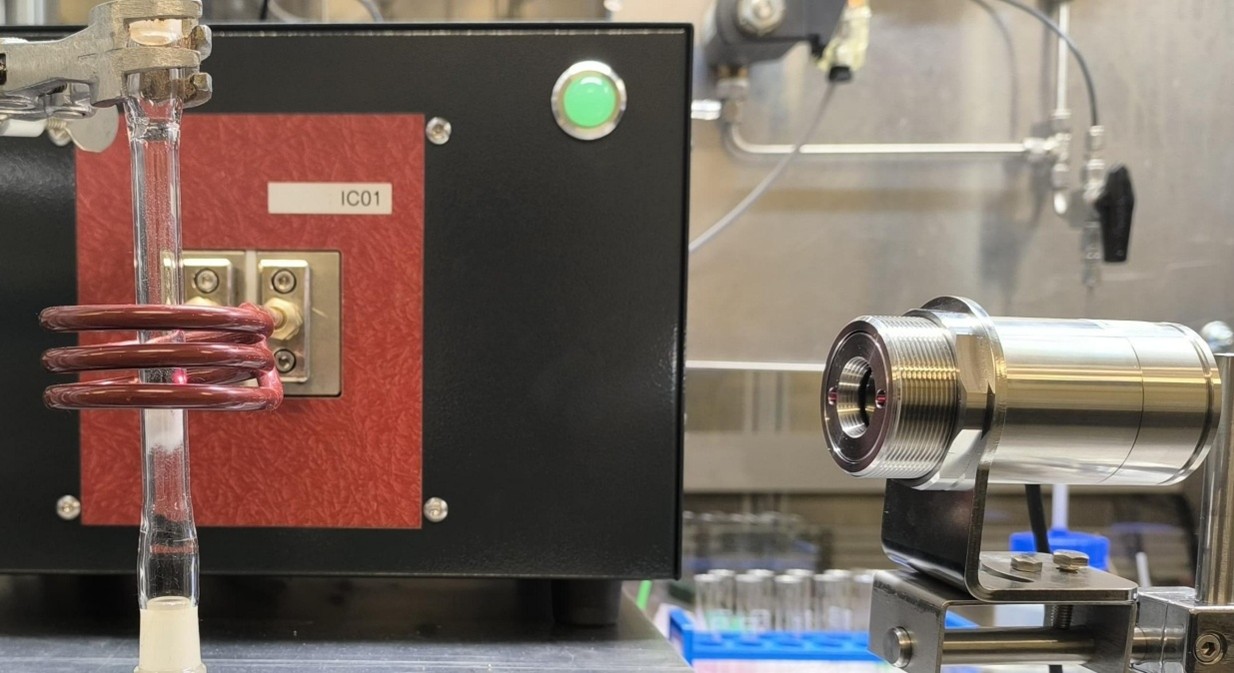
We are exploring induction heating as a highly dynamic, electrified heating concept for catalytic reactors, which may enable new approaches for both fundamental operando studies and technical applications. Our aim is to develop modified catalyst beds that facilitate induction heating by incorporating a so-called susceptor material with suitable magnetic properties for induction heating. Ideally, the susceptor is identical to or co-located with the active phase, which allows for rapid heating at or close to the catalytically active site. Similar effects can be achieved by bringing larger susceptor materials in direct contact with the catalyst. Hence, a range of scale-bridging approaches for the integration of the susceptor from laboratory reactor dimensions down to the nanometer scale is realized. Combining suitable induction-heating catalyst concepts with reactors featuring advanced temperature control is central to this work.
Related research project: CRC 1441
Bayesian optimization of catalytic technologies
By nature, catalyst development and chemical reactor design constitute a multi-dimensional optimization problems with an extremely large parameter space. Therefore, data-driven approaches hold great potential for accelerating material discovery and advancing catalysis engineering. Simultaneous optimization of catalyst performance in terms of activity, selectivity, and stability can be achieved by identifying optimal parameters throughout catalyst preparation, post-processing, testing, regeneration, and other steps. For example, catalyst promotion often follows volcano-type behavior with performance peaking at an optimal loading. Rather than relying on traditional trial-and-error experimentation, we apply Bayesian optimization (BO) to efficiently navigate this high-dimensional parameter space. Our BO algorithms aim to identify both the global optimum and achieve broad coverage of the parameter space while minimizing experimental effort. Our practical workflow integrates and validates existing data and builds on a so-called first generation of experimental results. BO enables highly constrained, multi-objective optimization, while allowing multiple parameters to be adjusted simultaneously. The parameter combinations proposed by BO are then experimentally validated, enabling iterative refinement of the approach.
Related research project: CDC, InnoPool - AutoMat
Synthesis gas fermentation
Anaerobic fermentation offers the possibility of using CO2 as a carbon source for chemicals and fuels, but also for the production of future food and animal feed. Synthesis gas fermentation is an anaerobic fermentation process in which gas mixtures of hydrogen, carbon dioxide (CO2) and carbon monoxide (CO) are converted into alcohols and organic acids by acetogenic microorganisms, such as Clostridium ljungdahlii. Compared to the use of classic thermocatalytic processes, the microbial conversion of synthesis gas has a high potential for increasing efficiency and simplifying handling. Similar to conventional processes, synthesis gas fermentation can also be influenced by adjusting process parameters. We study the fermentation of synthesis gas in the “SANDRA” laboratory plant, which enables continuous long-term experiments under elevated pressure. The aim of this work is to optimize the formed products by varying the gas components and to develop a model of the reactor system for predicting steady states and for process control.
Related research project: NSERC-DFG SUSTAIN, NFDI4Cat

Cooperation
Industrial partners
- Aixelo, Inc.
- BASF SE
- Clariant AG
- hte GmbH - the high throughput experimentation company
- Hydrogenious LOHC Technologies GmbH, Germany
- INERATEC GmbH, Germany
- omegadot software & consulting GmbH
- Sasol Germany GmbH, Germany
- Sasol Limited, South Africa
Academic partners
- Deutsches Elektronen-Synchrotron DESY, Germany
- Durban University of Technology (DUT), South Africa
- Forschungszentrum Jülich GmbH (FZJ), Germany
- Helmholtz Institute Erlangen-Nürnberg for Renewable Energy (HI ERN, IET-2)
- Institute for a sustainable Hydrogen Economy (IHE)
- Fraunhofer Institute for Ceramic Technologies and Systems (IKTS), Germany
- Helmholtz-Zentrum Berlin für Materialien und Energie (HZB), Germany
- Imperial College London (ICL), Great Britain
- Karlsruhe Institute of Technology (KIT)
- Engler-Bunte-Institut (EBI)
- Institute for Applied Materials – Electrochemical Technologies / Institut für Angewandte Materialien – Elektrochemische Technologien (IAM-ET)
- Institute for Chemical Technology and Polymer Chemistry / Institut für Technische Chemie und Polymerchemie (ITCP)
- Institute for Inorganic Chemistry / Institut für Anorganische Chemie (AOC)
- Institute for Micro Process Engineering / Institut für Mikroverfahrenstechnik (IMVT)
- Institute for Photon Science and Synchrotron Radiation (IPS)
- Institute for Quantum Materials and Technologies (IQMT)
- Institute for Technical Chemistry / Institut für Technische Chemie (ITC)
- Institute of Chemical Process Engineering / Institut für Chemische Verfahrenstechnik (CVT)
- Institute of Mechanical Process Engineering and Mechanics (MVM)
- Institute of Nanotechnology / Institut für Nanotechnologie (INT)
- Institute of Thermal Process Engineering / Institut für Thermische Verfahrenstechnik (TVT)
- Karlsruhe Nano Micro Facility (KNMFi)
- Laboratory for Electron Microscopy / Laboratorium für Elektronenmikroskopie (LEM)
- MAX IV Laboratory, Sweden
- Max Planck Institute for Chemical Energy Conversion (MPI cec)
- University of Cape Town (UCT), South Africa
- University of Erlangen-Nürnberg (FAU), Germany
- University of KwaZulu-Natal (UKZN), South Africa
- University of Padova, Italy
- Vienna University of Technology, Austria
Equipment and methods
We offer a broad range of catalyst materials ranging from nanoparticles to supported or bulk catalysts as well as shaped catalyst bodies for academic and contract research. Further, we pool expertise in material characterization and maintain access to a range of techniques.
For further information, please get in touch: moritz.wolf∂kit.edu.