
Materialsynthese und Scale-up
Mission der Gruppe
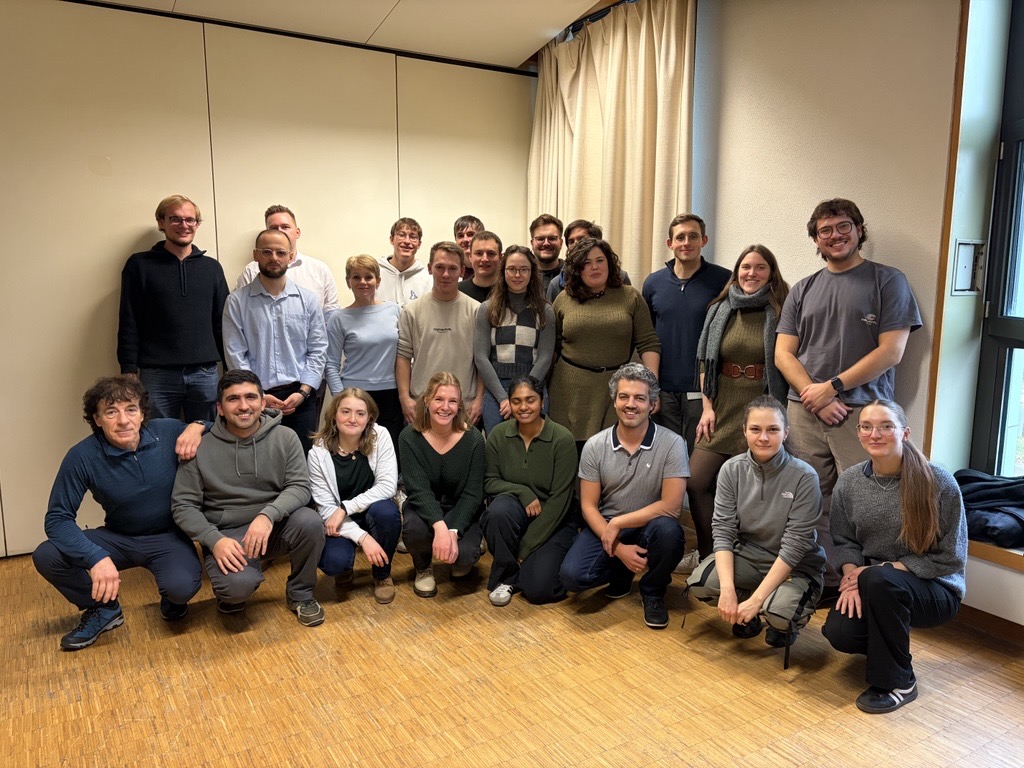
Die Gruppe „Materialsynthese und Scale-up" wurde 2022 am IKFT gegründet. Ihre Aufgabe besteht darin, die Lücke zwischen Grundlagenforschung und angewandten katalytischen Technologien zu schließen und neue Katalysatormaterialien zu entwickeln, welche die globale Energiewende unterstützen. Unsere Arbeit konzentriert sich auf die nachhaltige Nutzung von Kohlenstoffdioxid (CO₂) und die Integration erneuerbarer Elektrizität in katalytische Prozesse zur Herstellung von Energieträgern, wie z. B. Wasserstoff (H2) und dessen Derivaten, Zwischenprodukten und Chemikalien. Dies umfasst die Entwicklung skalierbarer Herstellungsverfahren für Katalysatoren und katalytische Materialien sowie deren Überführung in technische katalytische Anwendungen.
Forschungsziel der Arbeitsgruppe
Die Forschungsgruppe konzentriert sich auf die Katalysatorentwicklung und katalytische Technologien zur Synthese chemischer Energieträger im Rahmen der globalen Energiewende und des Rohstoffwandels. Katalysatordesign und skalierbare Materialsynthese bilden zentrale Elemente unserer Forschung. Unsere Arbeit umfasst mehrere Skalen: von der Synthese von Nanopartikeln für Modellkatalysatoren bis zur Herstellung geformter Katalysatorkörper sowie deren Anwendung. Damit verbinden wir akademische Forschung mit Fragestellungen der technischen Anwendung. Im Anschluss an die Synthese werden Morphologie, Oberflächen- und Volumeneigenschaften der Katalysatoren mithilfe verschiedener Charakterisierungstechniken (Mikroskopie, Spektroskopie, Röntgenbeugung, Sorption, Thermogravimetrie usw.) analysiert, um die Struktur-Aktivitäts-, Struktur-Selektivitäts- und Struktur-Stabilitäts-Beziehungen zu verstehen, welche die katalytische Leistungsfähigkeit bestimmen.
Darüber hinaus unterstützt die Gruppe aktiv die gemeinsame Initiative zur Förderung der digitalen Transformation der Katalyseforschung. Im Rahmen der NFDI4Cat 2.0 „Use Cases“ adressieren wir insbesondere die Lücken an der Schnittstelle zwischen akademischer Forschung im Labormaßstab und industrieller Umsetzung im großtechnischen Maßstab. Das übergeordnete Ziel besteht darin, eine skalierbare, übertragbare digitale Infrastruktur mit standardisierten Metadaten und einem einheitlichen Vokabular zu etablieren, um Herausforderungen in Bezug auf Reproduzierbarkeit und Übertragbarkeit zu meistern.
Der Forschungsschwerpunkt liegt auf nachhaltiger Katalyse und Verfahrenstechnik für die globale Energiewende und umfasst Themen wie:
- Chemische Valorisierung von Kohlenstoffdioxid
- Chemische Wasserstoffspeicherung mittels flüssiger organischer Wasserstoffträger (LOHCs)
- Induktive Beheizung katalytischer Technologien
- Katalysatorformgebung durch Tablettierung oder Agglomeration
- Synthesegasfermentation
- Ammoniakreformierung

Forschungsthemen und -projekte
Neuartige Katalysatormaterialien zur Aktivierung von CO₂
Zur Valorisierung von CO₂ entwickeln wir neue Katalysatormaterialien auf Basis von verfügbaren Übergangsmetallen, um die grundlegenden Zusammenhänge zwischen Struktur und Aktivität, Selektivität sowie Stabilität zu untersuchen. Neben Mehrkomponentensystemen modifizieren wir auch Trägermaterialien, z. B. durch den Einsatz von Kohlenstoffnitrid oder durch gezielte Einstellung einer Bifunktionalität. Die Anwendungen reichen von der CO₂-Methanisierung über die umgekehrte Wassergas-Shift-Reaktion (rWGS) bis zur direkten Synthese von Olefinen oder Methanol. Darüber hinaus untersuchen wir Katalysatoren aus verwandten Anwendungen, um mittels fortschrittlicher Charakterisierungstechniken Einblicke in strukturelle Abhängigkeiten und zugrunde liegende Mechanismen zu gewinnen. Ein zentrales Ziel ist die Verknüpfung von Syntheseparametern mit Katalysatoreigenschaften und -leistungsfähigkeit. Dazu werden modifizierte Trägermaterialien häufig mit separat synthetisierten Nanopartikeln mit definierten Eigenschaften dekoriert, um einen direkten Vergleich mit Referenz- und alternativen Trägermaterialien zu ermöglichen.
Beteiligung in Forschungsprojekten: MTET, CDC, CARE-O-SENE, NFDI4Cat

Flüssiger organischer Wasserstoffträger (LOHC)
Die LOHC-Technologie stellt eine Alternative für den Transport und die Lagerung von hochentzündlichem molekularem Wasserstoff dar. Wasserstoff wird chemisch an Trägermoleküle gebunden. Diese LOHCs sind in der Regel nicht entflammbar, weisen eine geringe Toxizität auf, verfügen über einen breiten Flüssigkeitsbereich und bieten eine hohe Wasserstoffspeicherkapazität. Dieser Ansatz mit chemischer Speicherung in Kohlenwasserstoffen ermöglicht aufgrund vergleichbarer Eigenschaften zudem die Nutzung bestehender Infrastruktur für Flüssigkraftstoffe (Diesel, Benzin) für sichere und einfache globale Lieferketten. Wir konzentrieren uns auf Benzyltoluol (H0-BT), welches reversibel zu Perhydrobenzyltoluol (H12-BT) hydriert und anschließend wieder zu H0-BT dehydriert werden kann. Die technische Freisetzung von Wasserstoff erfordert jedoch aufgrund der stark endothermen Natur der Dehydrierungsreaktion relativ hohe Reaktionstemperaturen und der Prozess muss große Mengen an freigesetztem Wasserstoff bewältigen. Daher entwickeln wir katalytische Technologien für die Dehydrierung, einschließlich der Entwicklung und des Scale-ups neuartiger Katalysatoren sowie deren Integration in verschiedene Reaktorkonzepte, wie z. B. einen kontinuierlichen Dreiphasen-Slurry-Reaktor mit verbesserten Stoff- und Wärmeübertragungseigenschaften.
Beteiligung in Forschungsprojekten: MTET, CDC, Oxo-LOHC, InnoPool - AutoMat

Skalierung der Synthese und Formgebung von Katalysatoren
Für technische Anwendungen werden große Mengen an katalytischen Materialien benötigt. Daher untersuchen wir die Skalierbarkeit von Syntheseverfahren, um die Überführung von Forschungskatalysatoren in die praktische Anwendung zu ermöglichen. Unsere tensidfreie Nanopartikelsynthese von Metall(Ce, Co, Cu, Fe, In, Ni)-oxid-, -hydroxid- und -oxyhydroxid- liefert mehrere Gramm Nanopartikel mit definierten Eigenschaften für Modellsysteme und Grundlagenforschung. Klassische Katalysatorherstellungsverfahren, wie beispielsweise Ko-Fällung und Imprägnierung, werden auf den Kilogrammbereich hochskaliert, um Kooperationspartner und Demonstrationsanlagen mit ausreichend Katalysatormaterial zu versorgen. Da die hergestellten Katalysatormaterialien in der Regel Pulver im Mikrometermaßstab darstellen, müssen sie durch Formgebungsprozesse in stabile, millimetergroße dreidimensionale Strukturen überführt werden. Bei der Formgebung können anwendungsrelevante Eigenschaften verloren gehen aber auch angepasst werden, wobei zusätzliche Komponenten wie Schmier- oder Bindemittel oft erforderlich sind, um die Stabilität und Herstellbarkeit der geformten Körper zu gewährleisten. Wir konzentrieren uns hierbei auf die Tablettierung und Agglomeration von Katalysatoren, um den Einfluss diverser Parameter auf die physikalisch-chemischen und katalytischen Eigenschaften zu untersuchen.
Beteiligung in Forschungsprojekten: MTET, Oxo-LOHC, CDC, NFDI4Cat

Induktive Beheizung katalytischer Reaktoren
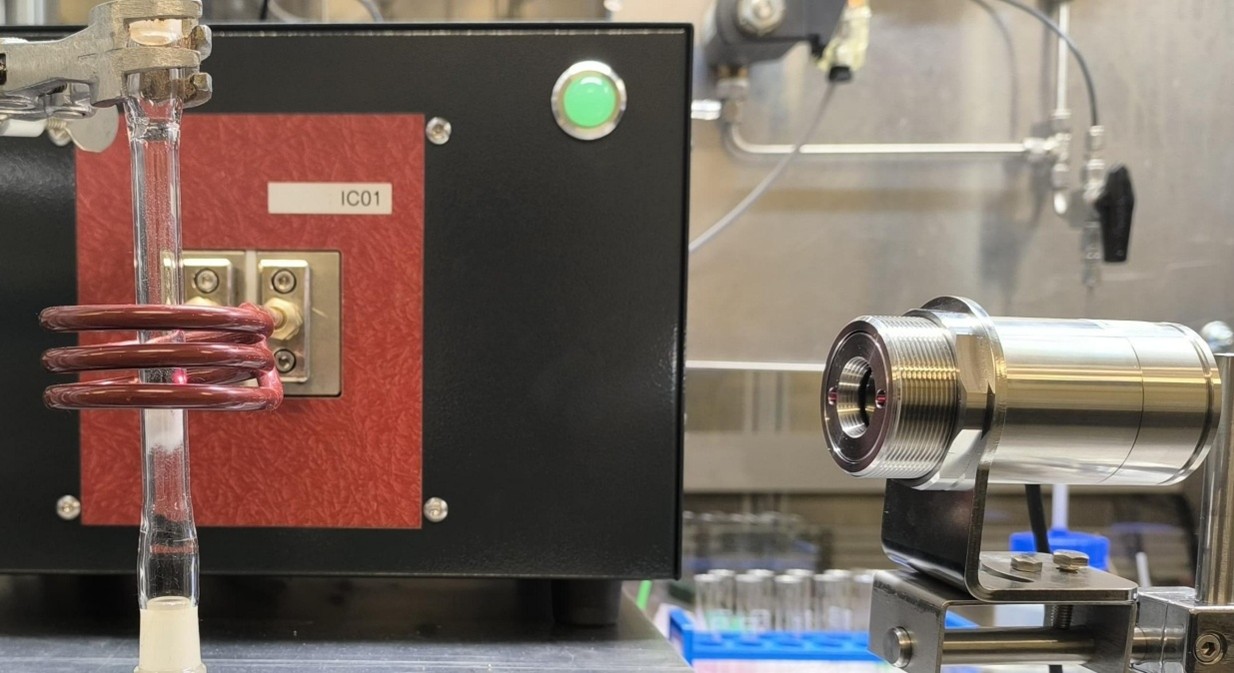
Wir wollen die induktive Beheizung als hochdynamisches, elektrifiziertes Heizkonzept für katalytische Reaktoren nutzen, um neue Ansätze sowohl für grundlegende Operando-Studien als auch für technische Anwendungen zu ermöglichen. Unser Ziel ist die Entwicklung modifizierter Katalysatorbetten, welche die induktive Beheizung durch die Integration eines sogenannten Suszeptormaterials mit geeigneten magnetischen Eigenschaften ermöglichen. Idealerweise stellt der Suszeptor gleichzeitig die aktive Phase dar oder steht mit ihr im engen Kontakt, wodurch eine schnelle Beheizung an oder in der Nähe der katalytisch aktiven Stelle ermöglicht wird. Ähnliche Effekte lassen sich erzielen, indem Suszeptormaterialien im Millimetermaßstab in direkten Kontakt mit dem Katalysator gebracht werden. Somit kann eine Reihe skalenübergreifender Ansätze von Labor-Reaktordimensionen bis hinunter zur Nanometerskala für die Integration eines Suzeptors genutzt werden. Die Kombination geeigneter Katalysatorkonzepte für die induktive Beheizung mit Reaktoren, die über eine einstellbare dynamische Temperaturregelung verfügen, steht im Zentrum dieser Arbeit.
Beteiligung in Forschungsprojekten: CRC 1441
Bayes'sche Optimierung katalytischer Technologien
Katalysatorentwicklung und der Betrieb chemischer Reaktoren stellen von Natur aus ein mehrdimensionales Optimierungsproblem mit einem äußerst großen Parameterraum dar. Daher bieten datengetriebene Ansätze ein großes Potenzial zur beschleunigten Entdeckung neuer Materialien oder zur Entwicklung neuer Katalysatortechnologien. Eine simultane Optimierung der Katalysatorleistungsfähigkeit hinsichtlich Aktivität, Selektivität und Stabilität kann durch die Identifizierung optimaler Parameter während Katalysatorherstellung, -nachbehandlung, -testung, -regeneration und weitere Schritte erreicht werden. Beispielsweise folgt die Promotierung von Katalysatoren meist einem vulkanartigen Verhalten, bei welchem die Leistungsfähigkeit bei einer optimalen Beladung ihr Maximum erreicht. Anstelle auf traditionelle Trial-and-Error-Experimente zurückzugreifen, wenden wir die Bayes'sche Optimierung (BO) an, um diesen hochdimensionalen Parameterraum effizient zu erschließen. Unsere BO-Algorithmen zielen darauf ab, sowohl das globale Optimum zu identifizieren als auch eine breite Abdeckung des Parameterraums zu erreichen, während gleichzeitig der experimentelle Aufwand minimiert wird. Unser Arbeitsablauf integriert und validiert vorhandene Daten und baut auf einer sogenannten ersten Generation experimenteller Ergebnisse auf. Die BO ermöglicht eine stark beschränkte Mehrzieloptimierung, bei welcher mehrere Parameter gleichzeitig angepasst werden können. Die von der BO vorgeschlagenen Parameterkombinationen werden anschließend experimentell validiert, was eine iterative Anpassung der Algorithmen ermöglicht.
Beteiligung in Forschungsprojekten: CDC, InnoPool - AutoMat
Synthesegasfermentation
Die anaerobe Fermentation bietet die Möglichkeit, Kohlendioxid als Kohlenstoffquelle für Chemikalien und Kraftstoffe, aber auch für die Herstellung von zukünftigen Nahrungsmitteln und Tierfutter zu nutzen. Die Synthesegasfermentation ist ein anaerober Fermentationsprozess, bei welchem Gasgemische aus Wasserstoff (H2), Kohlendioxid (CO₂) und Kohlenmonoxid (CO) durch acetogene Mikroorganismen wie Clostridium ljungdahlii in Alkohole und organische Säuren umgewandelt werden. Im Vergleich zur Nutzung klassischer thermokatalytischer Verfahren besitzt die mikrobielle Umwandlung von Synthesegas ein hohes Potenzial zur Effizienzsteigerung und Vereinfachung der Handhabung. Ähnlich wie bei konventionellen Verfahren lässt sich auch die Synthesegasfermentation durch die Anpassung von Prozessparametern beeinflussen. Wir untersuchen die Fermentation von Synthesegas in der Laboranlage „SANDRA", die kontinuierliche Langzeitexperimente unter erhöhtem Druck ermöglicht. Ziel dieser Arbeit ist es, die gebildeten Produkte durch Variation der Gaszusammensetzung zu optimieren und ein Modell des Reaktorsystems zur Vorhersage stationärer Zustände und zur Prozessregelung zu entwickeln.
Beteiligung in Forschungsprojekten: NSERC-DFG SUSTAIN, NFDI4Cat

Kooperationen
Industriepartner
- Aixelo, Inc.
- BASF SE
- Clariant AG
- hte GmbH - the high throughput experimentation company
- Hydrogenious LOHC Technologies GmbH, Germany
- INERATEC GmbH, Germany
- omegadot software & consulting GmbH
- Sasol Germany GmbH, Germany
- Sasol Limited, South Africa
Akademische Partner
- Deutsches Elektronen-Synchrotron DESY
- Durban University of Technology (DUT), Südafrika
- Forschungszentrum Jülich GmbH (FZJ)
- Helmholtz-Institut Erlangen-Nürnberg für Erneuerbare Energien (HI ERN, IET-2)
- Institute for a sustainable Hydrogen Economy (IHE)
- Fraunhofer-Institut für Keramische Technologien und Systeme (IKTS)
- Friedrich-Alexander-Universität Erlangen-Nürnberg (FAU), Germany
- Helmholtz-Zentrum Berlin für Materialien und Energie (HZB)
- Imperial College London (ICL), Großbritannien
- Karlsruher Institut für Technologie (KIT)
- Engler-Bunte-Institut (EBI)
- Institut für Angewandte Materialien – Elektrochemische Technologien (IAM-ET)
- Institut für Anorganische Chemie (AOC)
- Institut für Chemische Verfahrenstechnik (CVT)
- Institut für Mechanische Verfahrenstechnik und Mechanik (MVM)
- Institut für Mikroverfahrenstechnik (IMVT)
- Institut für Nanotechnologie (INT)
- Institut für Photonenforschung und Synchrotronstrahlung (IPS)
- Institut für QuantenMaterialien und Technologien (IQMT)
- Institut für Technische Chemie (ITC)
- Institut für Technische Chemie und Polymerchemie (ITCP)
- Institut für Thermische Verfahrenstechnik (TVT)
- Karlsruhe Nano Micro Facility (KNMFi)
- Laboratorium für Elektronenmikroskopie (LEM)
- MAX IV Laboratory, Schweden
- Max-Planck-Institut für Chemische Energiekonversion (MPI cec)
- Technische Universität Wien, Österreich
- Technische Universität Wien, Österreich
- University of Cape Town (UCT), Südafrika
- University of KwaZulu-Natal (UKZN), Südafrica
- University of Padova, Italien
Ausstattung und Methoden
Wir bieten ein breites Spektrum an Katalysatormaterialien an, welches von Nanopartikeln über geträgerte oder Vollkatalysatoren bis hin zu geformten Katalysatorkörpern reicht und für akademische Kollaborationen und Auftragsforschung genutzt werden kann. Darüber hinaus bündeln wir Expertise in der Materialcharakterisierung und verfügen über Zugang zu einer Vielzahl von Methoden.
Für weitere Informationen wenden Sie sich bitte an: moritz.wolf∂kit.edu.